papers

the academic record. paleovirology, mostly. links go to the journals.

papers 10

Evolutionary history of endogenous human herpesvirus 6 reflects human migration out of Africa

Amr Aswad, Gaia Aimola, Dirk Wight, Pavitra Roychoudhury, Christine Zimmermann, Josephine Hill, et al. · Molecular Biology and Evolution · 2021 cited 47×

Human herpesvirus 6A and 6B (HHV-6) can integrate into the germline, and as a result, ∼70 million people harbor the genome of one of these viruses in every cell of their body. Until now, it has been largely unknown if 1) these integrations are ancient, 2) if they still occur, and 3) whether circulating virus strains differ from integrated ones. Here, we used next-generation sequencing and mining of public human genome data sets to generate the largest and most diverse collection of circulating and integrated HHV-6 genomes studied to date. In genomes of geographically dispersed, only distantly related people, we identified clades of integrated viruses that originated from a single ancestral event, confirming this with fluorescent in situ hybridization to directly observe the integration locus. In contrast to HHV-6B, circulating and integrated HHV-6A sequences form distinct clades, arguing against ongoing integration of circulating HHV-6A or “reactivation” of integrated HHV-6A. Taken together, our study provides the first comprehensive picture of the evolution of HHV-6, and reveals that integration of heritable HHV-6 has occurred since the time of, if not before, human migrations out of Africa.
Endogenization and excision of human herpesvirus 6 in human genomes

Amr Aswad, Josephine Hill, Dirk Wight, Benedikt B. Kaufer · PLOS Pathogens · 2020 cited 31×

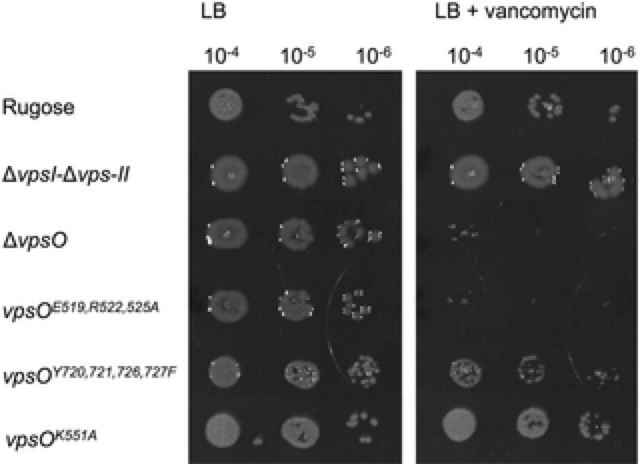
Production of an extracellular matrix is essential for biofilm formation, as this matrix both secures and protects the cells it encases. Mechanisms underlying production and assembly of matrices are poorly understood. Vibrio cholerae, relies heavily on biofilm formation for survival, infectivity, and transmission. Biofilm formation requires Vibrio polysaccharide (VPS), which is produced by vps gene-products, yet the function of these products remains unknown. Here, we demonstrate that the vps gene-products vpsO and vpsU encode respectively for a tyrosine kinase and a cognate tyrosine phosphatase. Collectively, VpsO and VpsU act as a tyrosine phosphoregulatory system to modulate VPS production. We present structures of VpsU and the kinase domain of VpsO, and we report observed autocatalytic tyrosine phosphorylation of the VpsO C-terminal tail. The position and amount of tyrosine phosphorylation in the VpsO C-terminal tail represses VPS production and biofilm formation through a mechanism involving the modulation of VpsO oligomerization. We found that tyrosine phosphorylation enhances stability of VpsO. Regulation of VpsO phosphorylation by the phosphatase VpsU is vital for maintaining native VPS levels. This study provides new insights into the mechanism and regulation of VPS production and establishes general principles of biofilm matrix production and its inhibition.

Cell-Derived Viral Genes Evolve under Stronger Purifying Selection in Rhadinoviruses

Amr Aswad, Aris Katzourakis · Journal of Virology · 2018 cited 9×

Viruses and hosts have been shown to capture genes from one another as part of the evolutionary arms race. Such genes offer a natural experiment on the effects of evolutionary pressure, since the same gene exists in vastly different selective environments. However, sequences of viral homologs often bear little similarity to the original sequence, complicating the reconstruction of their shared evolutionary history with host counterparts. In this study, we use a genus of herpesviruses as a model system to comprehensively investigate the evolution of host-derived viral genes, using a synthesis of genomics, phylogenetics, selection analysis, and nucleotide and amino acid modeling.

A novel viral lineage distantly related to herpesviruses discovered within fish genome sequence data

Amr Aswad, Aris Katzourakis · Virus Evolution · 2017 cited 7×

Tobamovirus is a group of viruses that have become serious pathogens of crop plants. As part of a study informing risk of wild plant virus spill over to crops, we investigated the capacity of a solanaceous-infecting tobamovirus from an isolated indigenous flora to adapt to new exotic hosts. Yellow tailflower mild mottle virus (YTMMV) (genus Tobamovirus, family Virgaviridae) was isolated from a wild plant of yellow tailflower (Anthocercis littoria, family Solanaceae) and initially passaged through a plant of Nicotiana benthamiana, then one of Nicotiana glutinosa where a single local lesion was used to inoculate a N. benthamiana plant. Sap from this plant was used as starting material for nine serial passages through three plant species. The virus titre was recorded periodically, and 85% of the virus genome was sequenced at each passage for each host. Six polymorphic sites were found in the YTMMV genome across all hosts and passages. At five of these, the alternate alleles became fixed in the viral genome until the end of the experiment. Of these five alleles, one was a non-synonymous mutation (U1499C) that occurred only when the virus replicated in tomato. The mutant isolate harbouring U1499C, designated YTMMV-δ, increased its titre over passages in tomato and outcompeted the wild-type isolate when both were co-inoculated to tomato. That YTMMV-δ had greater reproductive fitness in an exotic host than did the wild type isolate suggests YTMMV evolution is influenced by host changes.

STEAK: A specific tool for transposable elements and retrovirus detection in high-throughput sequencing data

Amr Aswad, Aris Katzourakis · Virus Evolution · 2017 cited 36×

The advancements of high-throughput genomics have unveiled much about the human genome highlighting the importance of variations between individuals and their contribution to disease. Even though numerous software have been developed to make sense of large genomics datasets, a major short falling of these has been the inability to cope with repetitive regions, specifically to validate structural variants and accordingly assess their role in disease. Here we describe our program STEAK, a massively parallel software designed to detect chimeric reads in high-throughput sequencing data for a broad number of applications such as identifying presence/absence, as well as discovery of transposable elements (TEs), and retroviral integrations. We highlight the capabilities of STEAK by comparing its efficacy in locating HERV-K HML-2 in clinical whole genome projects, target enrichment sequences, and in the 1000 Genomes CEU Trio to the performance of other TE and virus detecting tools. We show that STEAK outperforms other software in terms of computational efficiency, sensitivity, and specificity. We demonstrate that STEAK is a robust tool, which allows analysts to flexibly detect and evaluate TE and retroviral integrations in a diverse range of sequencing projects for both research and clinical purposes.

Endogenous Viruses Provide Shortcuts in Antiviral Immunity

Aris Katzourakis, Amr Aswad · Current Biology · 2016 cited 2×

The genetic regulation of cell patterning within plant gametophytes remains poorly understood. Now, two new studies in the liverwort Marchantia polymorpha shed light on the conserved function of an RKD transcription factor as a key regulator of egg cell fate in the land plant lineage.

Convergent capture of retroviral superantigens by mammalian herpesviruses

Amr Aswad, Aris Katzourakis · Nature Communications · 2015 cited 665×

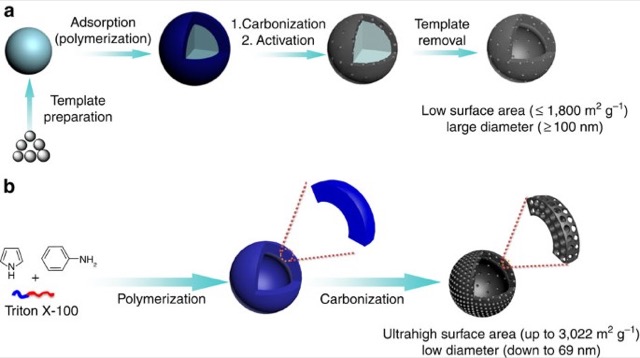
Exceptionally large surface area and well-defined nanostructure are both critical in the field of nanoporous carbons for challenging energy and environmental issues. The pursuit of ultrahigh surface area while maintaining definite nanostructure remains a formidable challenge because extensive creation of pores will undoubtedly give rise to the damage of nanostructures, especially below 100 nm. Here we report that high surface area of up to 3,022 m 2 g −1 can be achieved for hollow carbon nanospheres with an outer diameter of 69 nm by a simple carbonization procedure with carefully selected carbon precursors and carbonization conditions. The tailor-made pore structure of hollow carbon nanospheres enables target-oriented applications, as exemplified by their enhanced adsorption capability towards organic vapours, and electrochemical performances as electrodes for supercapacitors and sulphur host materials for lithium–sulphur batteries. The facile approach may open the doors for preparation of highly porous carbons with desired nanostructure for numerous applications.

The First Endogenous Herpesvirus, Identified in the Tarsier Genome, and Novel Sequences from Primate Rhadinoviruses and Lymphocryptoviruses

Amr Aswad, Aris Katzourakis · PLOS Genetics · 2014 cited 55×

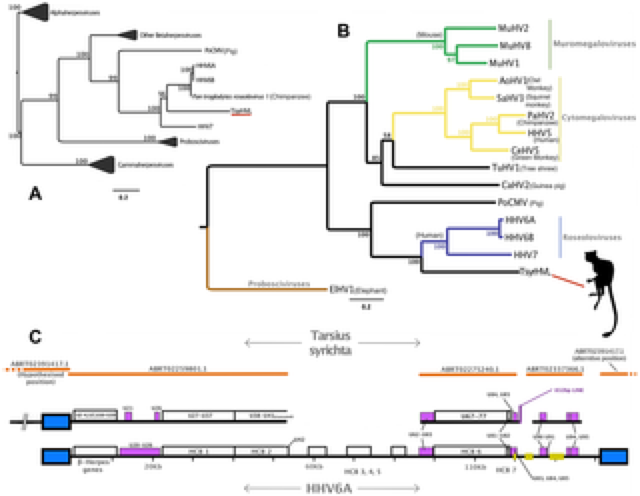
Herpesviridae is a diverse family of large and complex pathogens whose genomes are extremely difficult to sequence. This is particularly true for clinical samples, and if the virus, host, or both genomes are being sequenced for the first time. Although herpesviruses are known to occasionally integrate in host genomes, and can also be inherited in a Mendelian fashion, they are notably absent from the genomic fossil record comprised of endogenous viral elements (EVEs). Here, we combine paleovirological and metagenomic approaches to both explore the constituent viral diversity of mammalian genomes and search for endogenous herpesviruses. We describe the first endogenous herpesvirus from the genome of the Philippine tarsier, belonging to the Roseolovirus genus, and characterize its highly defective genome that is integrated and flanked by unambiguous host DNA. From a draft assembly of the aye-aye genome, we use bioinformatic tools to reveal over 100,000 bp of a novel rhadinovirus that is the first lemur gammaherpesvirus, closely related to Kaposi's sarcoma-associated virus. We also identify 58 genes of Pan paniscus lymphocryptovirus 1, the bonobo equivalent of human Epstein-Barr virus. For each of the viruses, we postulate gene function via comparative analysis to known viral relatives. Most notably, the evidence from gene content and phylogenetics suggests that the aye-aye sequences represent the most basal known rhadinovirus, and indicates that tumorigenic herpesviruses have been infecting primates since their emergence in the late Cretaceous. Overall, these data show that a genomic fossil record of herpesviruses exists despite their extremely large genomes, and expands the known diversity of Herpesviridae, which will aid the characterization of pathogenesis. Our analytical approach illustrates the benefit of intersecting evolutionary approaches with metagenomics, genetics and paleovirology.

The Origins of Giant Viruses, Virophages and Their Relatives in Host Genomes

Aris Katzourakis, Amr Aswad · BMC Biology · 2014 cited 25×

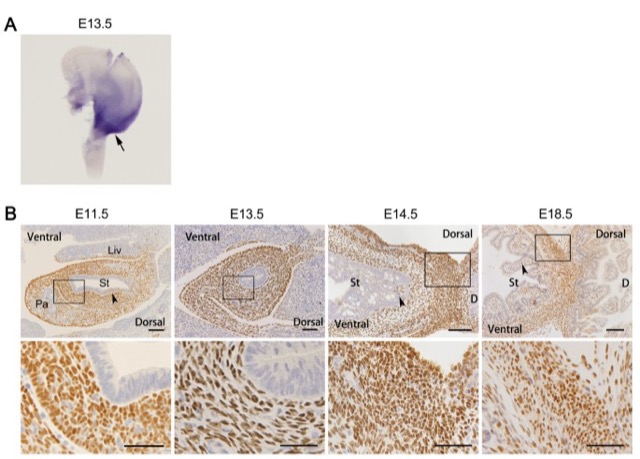
BACKGROUND: Abnormalities in pyloric development or in contractile function of the pylorus cause reflux of duodenal contents into the stomach and increase the risk of gastric metaplasia and cancer. Abnormalities of the pyloric region are also linked to congenital defects such as the relatively common neonatal hypertrophic pyloric stenosis, and primary duodenogastric reflux. Therefore, understanding pyloric development is of great clinical relevance. Here, we investigated the role of the LIM homeodomain transcription factor Isl1 in pyloric development. RESULTS: Examination of Isl1 expression in developing mouse stomach by immunohistochemistry, whole mount in situ hybridization and real-time quantitative PCR demonstrated that Isl1 is highly expressed in developing mouse stomach, principally in the smooth muscle layer of the pylorus. Isl1 expression was also examined by immunofluorescence in human hypertrophic pyloric stenosis where the majority of smooth muscle cells were found to express Isl1. Isl1 function in embryonic stomach development was investigated utilizing a tamoxifen-inducible Isl1 knockout mouse model. Isl1 deficiency led to nearly complete absence of the pyloric outer longitudinal muscle layer at embryonic day 18.5, which is consistent with Gata3 null mouse phenotype. Chromatin immunoprecipitation, luciferase assays, and electrophoretic mobility shift assays revealed that Isl1 ensures normal pyloric development by directly targeting Gata3. CONCLUSIONS: This study demonstrates that the Isl1-Gata3 transcription regulatory axis is essential for normal pyloric development. These findings are highly clinically relevant and may help to better understand pathways leading to pyloric disease.

Paleovirology and virally derived immunity

Amr Aswad, Aris Katzourakis · Trends in Ecology & Evolution · 2012 cited 176×

Paleovirology, the study of viruses on evolutionary timescales, can exploit information from endogenous viral elements (EVEs), which are the result of heritable horizontal gene transfer (HGT) from viruses to hosts. The availability of genomic data has increased opportunities to study EVEs, and bioinformatics techniques have been crucial in cataloguing EVE diversity and taxonomic coverage. Recent advances show that some EVEs have been co-opted as cellular genes, often as inhibitors of viral infection. These genes are an intriguing strategy in virus-host evolutionary battles in that genetic material is transferred from virus to host, and then used by the host against the virus. In this review, we consider the genes and processes involved in EVE-derived immunity (EDI), assess factors leading to its emergence, and outline how future work will benefit from incorporating evolutionary approaches.